Product Description
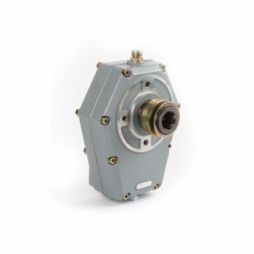
Agricultural Gearbox For Micro Tiller 90 degree farm pto right angle tractor slasher rotary tiller pga feeder mixer earth auger reducer
Agricultural Gearbox For Service applications
Power transmission systems designed to the requirements of the building industry and the services for the community: from cement mixers to hydraulic pumps and to generator sets.
Agricultural Gearbox For Micro Tiller
Micro Tiller Gearbox
1. Stainless Steel: SS201, SS303, SS304, SS316, SS416, SS420
2. Steel:C45(K1045), C46(K1046),C20
3. Brass:C36000 ( C26800), C37700 ( HPb59), C38500( HPb58), C27200(CuZn37), C28000(CuZn40)
4. Bronze: C51000, C52100, C54400, etc
5. Iron: 1213, 12L14,1215
6. Aluminum: Al6061, Al6063
7.OEM according to your request
Related Products
| Application: | Motor, Electric Cars, Motorcycle, Machinery, Marine, Toy, Agricultural Machinery, Car |
|---|---|
| Hardness: | Hardened Tooth Surface |
| Installation: | Horizontal Type |
| Layout: | Coaxial |
| Gear Shape: | – |
| Step: | – |
| Samples: |
US$ 999/Piece
1 Piece(Min.Order) | |
|---|
Main Advantages of Using Miter Gearboxes for Space-Saving Design
Miter gearboxes offer several significant advantages when it comes to space-saving design:
Compact Configuration: Miter gearboxes are designed with bevel gears that transmit motion at a 90-degree angle within a single gearbox housing. This eliminates the need for additional components or complex transmission systems, resulting in a more compact overall design.
Efficient Use of Space: The 90-degree motion change provided by miter gearboxes allows for optimal space utilization in applications where a change in motion direction is required. This efficient use of space is particularly valuable in tight or constrained environments.
Integration into Small Spaces: Miter gearboxes are well-suited for integration into machinery, equipment, and systems with limited available space. Their compact design enables them to fit into confined areas without sacrificing performance.
Reduced Footprint: By eliminating the need for additional components or external motion-changing mechanisms, miter gearboxes help reduce the overall footprint of the system. This can be especially beneficial in applications where space is at a premium.
Enhanced Flexibility: The space-saving design of miter gearboxes allows engineers and designers to create more versatile and adaptable systems. Components can be arranged more efficiently, and the saved space can be allocated for other functional elements.
Modular Assembly: Miter gearboxes can be part of modular designs, where multiple components can be easily integrated and interconnected. This modular approach further contributes to space savings and allows for customization.
Cost Efficiency: The compact nature of miter gearboxes can lead to cost savings in terms of materials, manufacturing, and assembly. The simplified design also reduces the risk of potential failures or maintenance issues associated with more complex systems.
Overall, miter gearboxes offer a space-saving design that is valuable in a wide range of applications, from industrial machinery to robotics, where efficient use of available space is crucial.
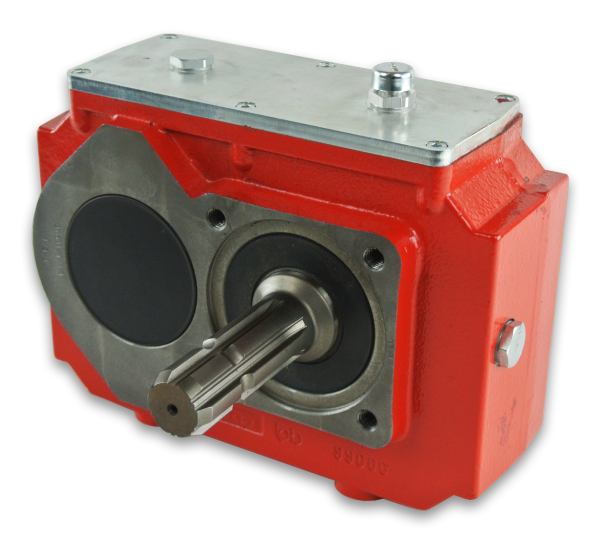
Differences Between Miter Gearboxes and Other Types of Gearboxes
Miter gearboxes possess distinct characteristics that differentiate them from other types of gearboxes, such as helical, spur, and planetary gearboxes. These differences contribute to their unique capabilities and suitability for specific applications:
- Gear Arrangement: Miter gearboxes utilize bevel gears that intersect at a 90-degree angle. In contrast, helical and spur gearboxes use parallel or co-planar gear arrangements, and planetary gearboxes feature multiple gears arranged around a central sun gear.
- Motion Direction Change: Miter gearboxes excel at changing the direction of rotational motion by 90 degrees. Other gearboxes may change motion direction by different angles or maintain the same direction.
- Compactness: Miter gearboxes are known for their compact design, making them suitable for applications with limited space. Planetary gearboxes, while compact, have a different internal structure.
- Backlash Control: Miter gearboxes are designed to minimize backlash and ensure accurate motion transfer. Helical and spur gearboxes may have more backlash due to their gear arrangement, while planetary gearboxes can provide good backlash control.
- Torque and Speed: Different gearboxes vary in their torque and speed capabilities. Miter gearboxes are suitable for moderate torque and speed applications, while planetary gearboxes offer high torque density.
- Applications: Miter gearboxes are commonly used for applications requiring 90-degree changes in motion direction, such as conveyor systems, printing machinery, and some types of industrial equipment. Helical and spur gearboxes are prevalent in various machinery and equipment. Planetary gearboxes find use in robotics, aerospace, and heavy machinery.
Each type of gearbox has its own advantages and is chosen based on the specific requirements of the application, including space constraints, motion control precision, torque, and speed needs.
Miter Gearbox: Function and Mechanism
A miter gearbox, also known as a bevel gearbox or angle gearbox, is a type of gearbox that transmits power and changes the direction of rotational motion between intersecting shafts positioned at a 90-degree angle to each other. It consists of a set of bevel gears with intersecting axes.
The function of a miter gearbox in mechanical systems is to redirect the rotational motion of input shaft(s) to output shaft(s) at a right angle. This allows for power transmission and torque conversion between two shafts that are not aligned. Miter gearboxes are particularly useful when space constraints or specific mechanical configurations require a change in the direction of motion.
The working principle of a miter gearbox involves the meshing of bevel gears. Bevel gears have conically shaped teeth that enable them to mesh smoothly at a 90-degree angle. When the input shaft rotates, the teeth of the input bevel gear engage with the teeth of the output bevel gear, causing the output shaft to rotate perpendicularly to the input shaft. The gear ratio and number of teeth on the gears determine the speed and torque conversion between the input and output shafts.
Miter gearboxes find applications in various industries, such as automotive, machinery, agriculture, and robotics, where changes in motion direction are required. They are often used in equipment that needs to transmit power around corners or in tight spaces while maintaining the desired torque and speed characteristics.


editor by CX 2023-10-19