Product Description
Product Description
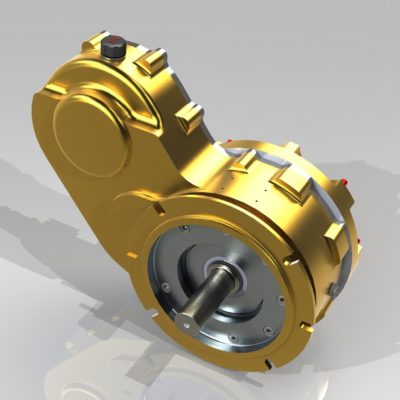
The gearbox of a mower driven by a hydraulic motor is a new type of gearbox independently developed by the CHINAMFG machinery factory according to the requirements of customers. This mower is suitable for various hydraulic motors. The input end face and input shaft can select the corresponding hydraulic motor according to the customization of customers. The shape of the input surface is CHINAMFG 4 threaded hole connection, double threaded hole connection, square 4 threaded hole connection, rectangular spline, involute spline, single key, and so on.
Product Parameters
| ITEM | EP-rc51 |
| Ratio | 1:1.47/1:1.93 |
| Teeth | 22/15 29/15 |
| Module | 5.08 /4.0 |
| Power(HP) | 30 |
| Rated Input | 540rpm |
| Input/Output Description | Spline /Taper spline |
| Weight(N.W) | 29KG |
Company Profile
HangZhou Ever-power Transmission Machinery Co., Ltd. was established in 2006. The company is located in ZHangZhoug HangZhou, with 90 employees, an area of 3800 meters, and an annual output value of 40 million yuan. The company is committed to the R & D, manufacturing, and personnel training of various gearboxes, reducers, and construction machinery, including spiral bevel gearbox, spur gearbox, worm gearbox, and cylindrical gearbox. It also includes a variety of high-pressure cast valve body and shell products. Its products are used in various applications, such as agricultural mowers, snow sweepers, fertilizer applicators, grain conveyors, industrial equipment, oil mining machinery, marine industrial equipment, and engineering hydraulic components. More than 95% of its products are exported to Europe, the United States, and Australia. Asia and Canada. The company has strong technology and R & D capabilities, produces reliable and high-quality products, pursues a unique business philosophy and enjoys a high reputation in the manufacturing industry. Welcome to contact us by phone or email.
Our Equipments
Certification
Packaging and Shipment
Related products
PTO Shaft
Agricultural gearbox:
Flail mower gearbox, rotary tiller gearbox, lawn mower gearbox, rotary cutter gearbox, agricultural sprayer gearbox, post hole digger gearbox, feed mixer gearbox, rotary mower gearbox, gearbox for circular saws, irrigation reels gearbox, agricultural generator gearbox, fertilizer spreader gearbox, hydraulic drive gearbox, manure spreader gearbox, rotary rakes gearbox, hay tedders gearbox, micro tiller gearbox, cutter bars gearbox, fertilizer mixer gearbox, agitators gearbox for sewage, round baler gearbox, snowblower gearbox
/* March 10, 2571 17:59:20 */!function(){function s(e,r){var a,o={};try{e&&e.split(“,”).forEach(function(e,t){e&&(a=e.match(/(.*?):(.*)$/))&&1
| Application: | Motor, Electric Cars, Motorcycle, Machinery, Marine, Toy, Agricultural Machinery, Car |
|---|---|
| Function: | Distribution Power, Clutch, Change Drive Torque, Change Drive Direction, Speed Changing, Speed Reduction, Speed Increase |
| Layout: | Three-Ring |
| Hardness: | Hardened Tooth Surface |
| Installation: | Torque Arm Type |
| Step: | Stepless |
| Samples: |
US$ 9999/Piece
1 Piece(Min.Order) | |
|---|
Proper Installation and Alignment of Miter Gearboxes
Installing and aligning a miter gearbox correctly is essential to ensure its optimal performance and longevity. Follow these steps to achieve proper installation and alignment:
- Preparation: Gather all necessary tools and equipment for the installation, including mounting hardware, shims, and alignment tools.
- Mounting Surface: Ensure that the mounting surface is clean, flat, and free from any debris or contaminants that could affect the gearbox’s alignment and operation.
- Alignment Tools: Use precision alignment tools, such as dial indicators or laser alignment systems, to accurately measure and adjust the alignment of the gearbox and its input and output shafts.
- Check for Parallelism: Align the input and output shafts of the gearbox to be parallel to each other and perpendicular to the mounting surface. This step is crucial to prevent misalignment-induced wear and reduce backlash.
- Adjustment: Use shims or other adjustable components to fine-tune the alignment. Make incremental adjustments while continuously checking the alignment with the chosen alignment tools.
- Bearing Loads: Ensure that the bearings supporting the gearbox shafts are properly lubricated and preloaded according to the manufacturer’s recommendations. Proper bearing preload helps maintain alignment and reduces wear.
- Tightening Bolts: Tighten the mounting bolts gradually and evenly to avoid introducing additional misalignment during the installation process.
- Runout and Clearance: Check for any runout or clearance issues during rotation by turning the input shaft. If there is any binding, interference, or abnormal noise, investigate and address the cause before finalizing the installation.
- Final Checks: Double-check the alignment using the alignment tools and ensure that the gearbox operates smoothly without any unusual vibrations, noises, or resistance.
- Documentation: Keep a record of the alignment measurements and adjustments made during the installation process. This documentation can be valuable for future reference and maintenance.
Proper installation and alignment of miter gearboxes help optimize their performance, minimize wear and tear, and contribute to the overall efficiency and reliability of the mechanical system in which they are used.
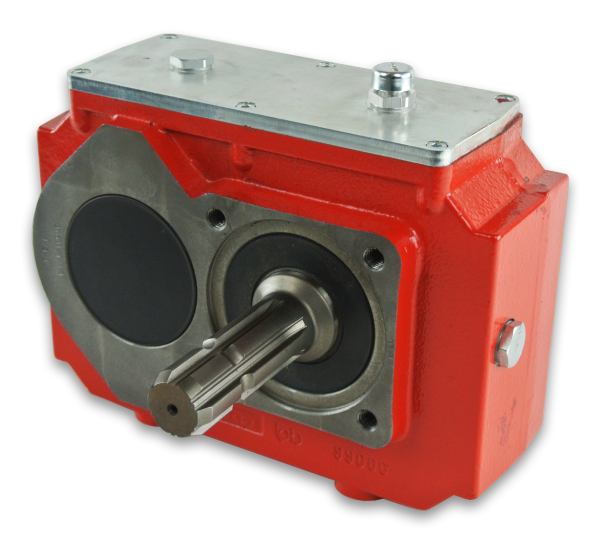
Differences Between Miter Gearboxes and Other Types of Gearboxes
Miter gearboxes possess distinct characteristics that differentiate them from other types of gearboxes, such as helical, spur, and planetary gearboxes. These differences contribute to their unique capabilities and suitability for specific applications:
- Gear Arrangement: Miter gearboxes utilize bevel gears that intersect at a 90-degree angle. In contrast, helical and spur gearboxes use parallel or co-planar gear arrangements, and planetary gearboxes feature multiple gears arranged around a central sun gear.
- Motion Direction Change: Miter gearboxes excel at changing the direction of rotational motion by 90 degrees. Other gearboxes may change motion direction by different angles or maintain the same direction.
- Compactness: Miter gearboxes are known for their compact design, making them suitable for applications with limited space. Planetary gearboxes, while compact, have a different internal structure.
- Backlash Control: Miter gearboxes are designed to minimize backlash and ensure accurate motion transfer. Helical and spur gearboxes may have more backlash due to their gear arrangement, while planetary gearboxes can provide good backlash control.
- Torque and Speed: Different gearboxes vary in their torque and speed capabilities. Miter gearboxes are suitable for moderate torque and speed applications, while planetary gearboxes offer high torque density.
- Applications: Miter gearboxes are commonly used for applications requiring 90-degree changes in motion direction, such as conveyor systems, printing machinery, and some types of industrial equipment. Helical and spur gearboxes are prevalent in various machinery and equipment. Planetary gearboxes find use in robotics, aerospace, and heavy machinery.
Each type of gearbox has its own advantages and is chosen based on the specific requirements of the application, including space constraints, motion control precision, torque, and speed needs.
Miter Gearbox: Function and Mechanism
A miter gearbox, also known as a bevel gearbox or angle gearbox, is a type of gearbox that transmits power and changes the direction of rotational motion between intersecting shafts positioned at a 90-degree angle to each other. It consists of a set of bevel gears with intersecting axes.
The function of a miter gearbox in mechanical systems is to redirect the rotational motion of input shaft(s) to output shaft(s) at a right angle. This allows for power transmission and torque conversion between two shafts that are not aligned. Miter gearboxes are particularly useful when space constraints or specific mechanical configurations require a change in the direction of motion.
The working principle of a miter gearbox involves the meshing of bevel gears. Bevel gears have conically shaped teeth that enable them to mesh smoothly at a 90-degree angle. When the input shaft rotates, the teeth of the input bevel gear engage with the teeth of the output bevel gear, causing the output shaft to rotate perpendicularly to the input shaft. The gear ratio and number of teeth on the gears determine the speed and torque conversion between the input and output shafts.
Miter gearboxes find applications in various industries, such as automotive, machinery, agriculture, and robotics, where changes in motion direction are required. They are often used in equipment that needs to transmit power around corners or in tight spaces while maintaining the desired torque and speed characteristics.


editor by CX 2024-01-09